Les soldes d’été 2020

The sales period is a key time for retailers, who use it to clear their stock, but also for customers, many of whom wait for this period to start shopping. However, there is a growing lack of interest among French consumers in sales periods and an upward trend in online shopping. In addition, the health crisis linked to COVID-19 has also had consequences for the sector, with the start of the 2020 summer sales being postponed.
2020 Summer Sales and COVID-19
This authorized period of selling at a loss is always highly anticipated by retailers because, as Yohann Petiot, Managing Director of the Alliance du commerce, explains, “winter and summer sales account for 30% of annual sales volumes in the clothing sector, which is more important than Christmas.”
This year, the summer sales will exceptionally begin on July 15, 2020 and end on August 11, 2020, 3 weeks later than originally planned. Another particularity is that this new date will apply to all departments in mainland France, including tourist and border regions that usually benefit from exemptions.
In addition, as with the 2020 winter sales, the 2020 summer sales will last 4 weeks instead of 6, at the request of retailers who want a shorter but more intense period.
Regarding the postponement of the sales dates, Economy Minister Bruno Le Maire justified it by the COVID-19 health crisis that we have been facing for several months and which forced non-food retailers to close. While major retailers continued selling their products online, this was not the case for small retailers without a website. According to the Economy Minister, this will allow retailers to sell their products at full price to rebuild their cash reserves before the start of the 2020 summer sales. This is especially important in sectors such as clothing, where stock levels are significant and space needs to be made for upcoming collections.
It remains to be seen whether customers, who now seem to have other priorities, will turn up.
Declining Interest Among French Consumers in Sales
Although stores seem to attract crowds during sales periods, French consumers’ interest in them has been declining noticeably over the years. The 2020 winter sales, although shortened to 4 weeks, had been relatively disappointing for retailers, who recorded an average 4.9% decline in in-store revenue.
This decline in interest can notably be explained by the fact that it is now possible to find good deals throughout the year thanks to numerous promotional offers such as Black Friday and private sales. French consumers therefore no longer wait for the winter or summer sales to spend money.
In addition, attitudes and consumption habits are changing. Many people want to consume less, or rather consume better, and therefore favor purchasing second-hand items in thrift stores or online, on websites such as eBay or Vinted. The rapid growth in the number of second-hand clothing stores in major French cities perfectly illustrates the enthusiasm generated by this new, more responsible form of consumption.
In addition, sales periods often prove disappointing for consumers who do not always find items they like among the discounted products.
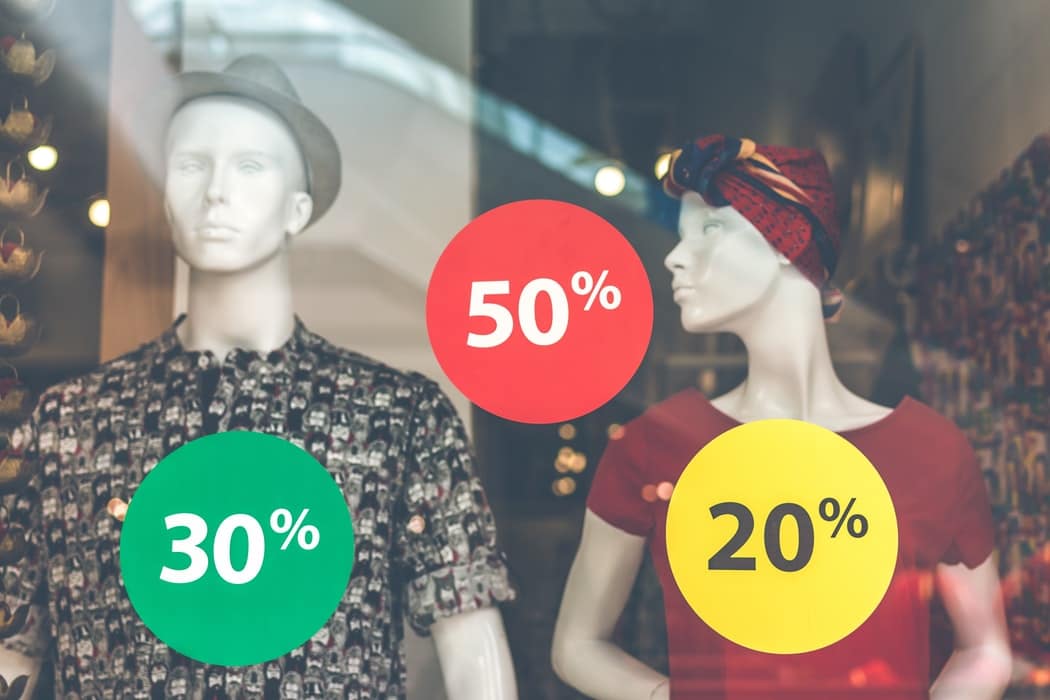
In-store promotional offers of 20%, 30% and 50%
Growth in Online Sales
One sector that is not weakening is online retail, even during sales periods. For example, the 2019 winter sales “recorded a 12% increase in purchase volume compared with the same period the previous year” (source: Webloyalty Panel). The current health crisis has further strengthened this trend, as the only way to obtain certain products was to order them online while stores were closed.
Today, online purchases are made on computers, but also on mobile devices. This is referred to as m-commerce. In 2019, these sales represented 39% of the revenue generated by websites in Fevad’s iCM panel.
To prepare properly for the 2020 summer sales, it is therefore in brands’ interests to implement strategies to boost their sales and attract as many customers as possible. To make sure your e-commerce business is ready for the big day, here are the best practices recommended by Feed Manager:
- Prepare a landing page dedicated to the sales period.
- Check that prices are correctly updated on your website, in your source feed and across your various acquisition channels so that everything is up to date from 8 a.m. when the sales begin.
- Use the promotional mechanisms specific to each channel to boost the click-through rate.
- Adapt your visuals specifically for this period, with the aim of maintaining a consistent visual identity across your different sales campaigns (display, search, etc.).
Optimize your ads based on user searches to make them more relevant.