Pokémon Go: Feed Manager Introduces Cost Per Pokémon Caught (CPPA)


The Pokémon Go craze is sweeping the world and will soon arrive in France. Given the exponential growth in the number of users and the engagement of mobile users, it is set to become a real communication opportunity for reaching “Poké-users”.
What exactly is Pokémon Go?
We all know the story of Ash, a Pokémon trainer accompanied by his faithful Pikachu, and his ambition to become a Pokémon Master. But before becoming an animated series, Pokémon was a game created by Satoshi Tajiri for Nintendo. Since July 6, when it was released in the United States, the franchise has seen the arrival of its first mobile version. Nintendo had been working on this new game for several years, notably with Niantic, which had already developed a game based on the same geolocation principle called Ingress.
The aim of the game is to catch as many Pokémon as possible and use them in battle arenas against other players. The game is based on geolocation and augmented reality. As you walk around while using the app, you will occasionally encounter Pokémon that you need to catch. Some Pokémon are rarer and more powerful than others.
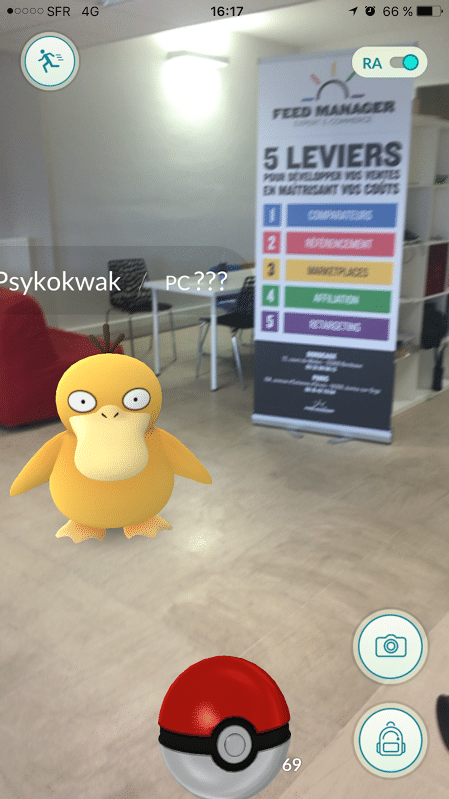
For example, today at the agency, we discovered Psyduck.
To better understand how it works, here is the first trailer:
https://www.youtube.com/watch?v=GQgbXJub-IQ
Rapid user engagement
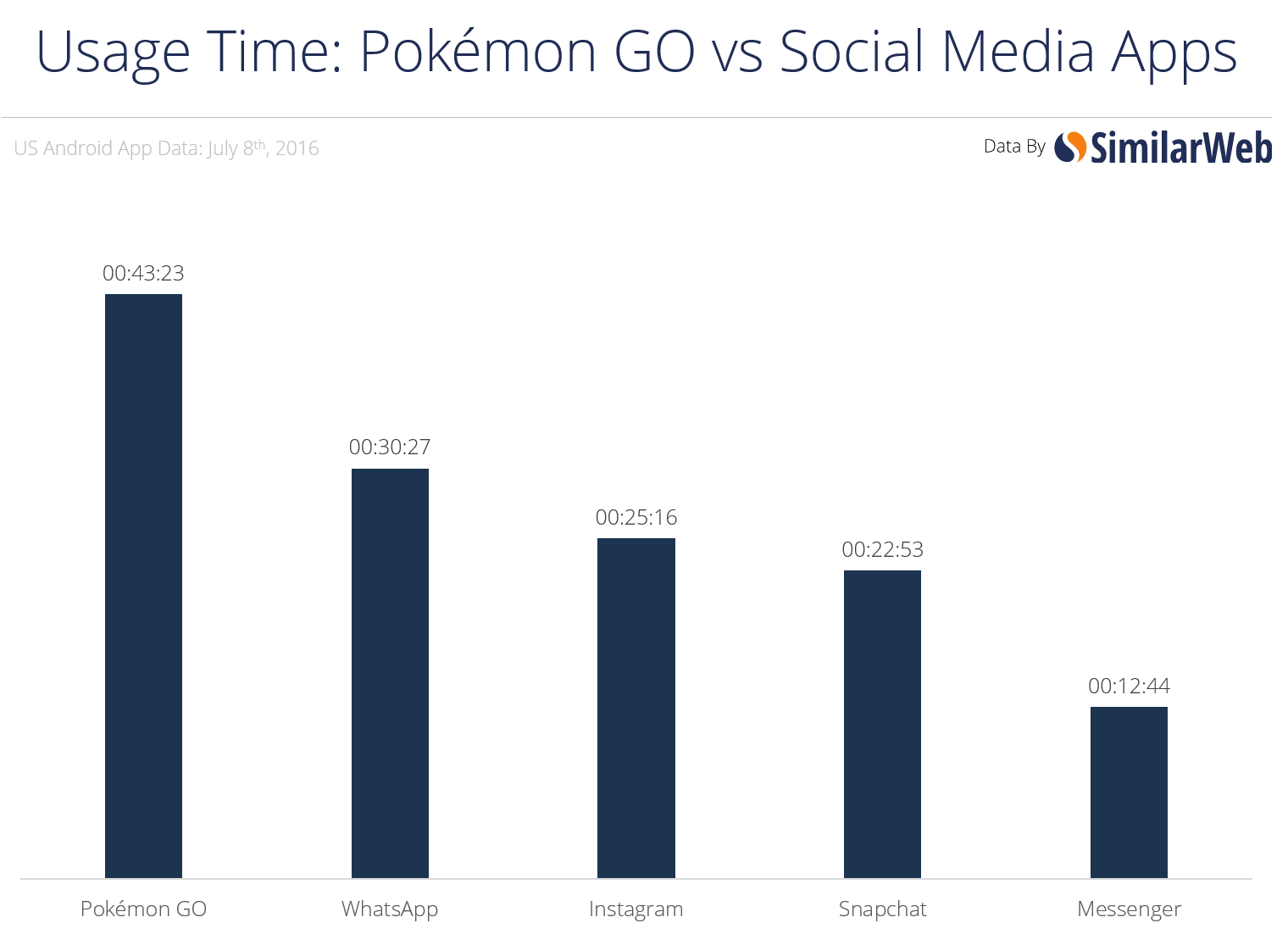
The day after its release, the game was already extremely popular, and just a few days later, users were spending more time on the app than on social networks such as Instagram, Snapchat and Messenger, according to a Similar Web study. Pokémon Go was even reportedly on the verge of overtaking Twitter in terms of active users.
The enthusiasm surrounding this new phenomenon should encourage advertisers to take advantage of the opportunity to communicate and promote their brands.
A new tool for generating traffic
As this video shows, when a rare Pokémon appears somewhere, it can generate a huge amount of traffic…
https://www.youtube.com/watch?v=SDsiJCQSmvk
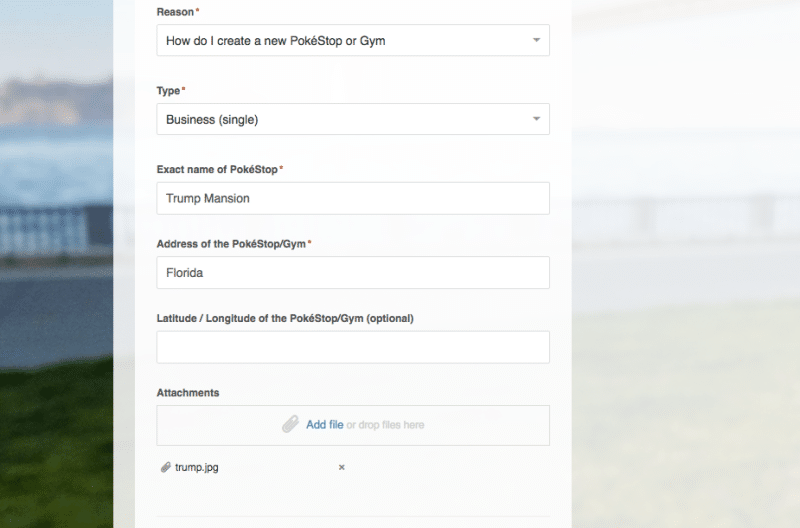
It is precisely this ability to generate traffic that could be particularly interesting to exploit. If you have the opportunity to have a rare Pokémon appear in your store or at a tourist attraction, it could quickly generate additional foot traffic. Until just a few days ago, NianticsLabs offered a form allowing businesses to request that a Gym, PokéStop or Pokémon be made available at their location. Unfortunately, the form has been removed for now… Perhaps this will give Nintendo time to find the right business model.
CPPC: Cost Per Pokémon Caught!
The Feed Manager teams therefore looked into the question: What kind of business model could be implemented, and above all, what performance indicators could be used to measure it?
It seems quite likely that the business model would be based on a fixed fee. But how long would the Pokémon remain available? How many times could it be caught, and by how many different people? The price could also vary depending on the rarity of the Pokémon.
Even though the commercial conditions remain hypothetical for now, the objective will be to quickly measure the return on investment of this new advertising format. A store’s revenue or the number of visitors to a museum could help measure its impact, but Niantic would need to prove that Pokémon Go was responsible for the increase in activity. If Niantic is able to tell advertisers how many times a Pokémon has been caught at a particular location, then the Cost Per Pokémon Caught, or CPPC, could clearly become the key performance indicator for a Pokémon Go campaign.