E-commerce: 5 fundamental things to know about Feed Management

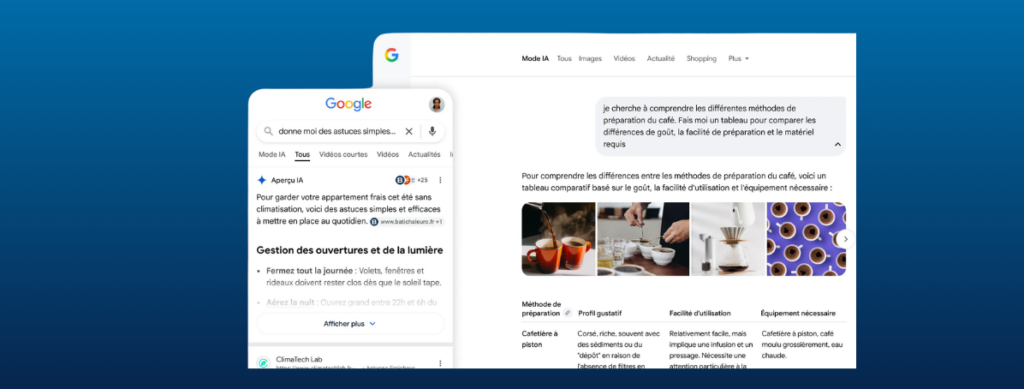
The acceleration of e-commerce and the rise of Retail Media and artificial intelligence (such as ChatGPT Ads and Google Gemini) are transforming how products are distributed. Today, a poorly structured catalog directly holds back paid acquisition (Google Shopping, Social Ads, Marketplaces). To generate profitable sales, mastering your product feeds has become essential.
Here are the 5 key pillars of feed management to maximize your brand’s visibility and ROAS in 2026.
Key takeaways
- Fuel for Ads & AI: The quality of your product feed directly powers the algorithms of Google, Meta, marketplaces and AI assistants (ChatGPT, Gemini).
- The aggregator as a central hub: Tools such as Channable, Lengow and Smartfeeds let you adapt a single source feed to dozens of channels while taking the load off IT teams.
- Optimization & automation: Enriching titles, customizing visuals and excluding out-of-stock items lowers CPA and prevents wasted budget.
- Ongoing governance: Daily monitoring is essential to fix disapprovals (e.g. in Merchant Center) and update feeds several times a day.
- Business-data-driven management: Combining your feed with business variables (margins, stock) through custom labels lets you focus your budget on your most profitable products.
1. Product data is the fuel for your Ads & AI campaigns
A product feed is more than an Excel file listing your items. It is the raw data that Google, Meta, TikTok and AI assistants use to match your offers with purchase intent. The more precise your data (titles, categories, attributes) and the more closely it reflects what users are searching for, the better your ads perform.
2. A feed aggregator lets you configure your product data at scale
Centralizing catalog management through a feed management solution (such as Lengow, Channable, Shopping Feed or Smartfeeds) avoids complex IT development. It allows you to adapt a single source feed to the specific technical requirements of dozens of channels (marketplaces, Search & Social) across different markets. These tools’ features enable our experts to build rules tailored to each industry and each product group.
3. Dynamic optimization makes all the difference
Having a feed available isn’t enough: it needs to be optimized. Enriching the semantics of your titles, excluding out-of-stock products and customizing visuals for each platform helps lower your cost per acquisition (CPA) while boosting the relevance of your ads. In-depth knowledge of each platform and its best practices drives greater efficiency.
4. Governance and fixing disapprovals are a daily task
Changing merchant policies, disapprovals in Google Merchant Center, seasonal promotions: feed management requires constant monitoring. A poorly maintained feed can lead to key products being disapproved, and therefore an immediate loss of revenue.
5. Business data (margins, prices, stock) unlocks real ROI
Strategic feed management combines your product data with your business variables (net margin, stock levels, price positioning against competitors). Creating dynamically updated custom labels lets you adjust your campaigns automatically. You can target your most profitable products without manually updating the list of products concerned every week.
Conclusion
Feed management is the invisible yet indispensable engine of your e-commerce performance.
At Feed Manager, we believe product data is the number one conversion lever and a genuine strategic tool. By structuring, enriching and automating your feeds to every platform (Search, Social, Marketplaces, Retail Media), we turn your technical constraints into a measurable competitive advantage.
We are experts in managing your products, from your source feed all the way to your media campaigns across every channel.
Would you like to audit your current feeds or optimize the ROAS of your multichannel campaigns? We support e-commerce players at every stage.
📩 Get in touch to talk with our experts.
FAQ
What is a feed aggregator in e-commerce?
It is a SaaS tool that centralizes your product catalog so it can be adapted and automatically distributed across multiple channels (Google Shopping, Meta, Amazon, Cdiscount) from a single interface.
Why work with an agency rather than managing your feed in-house?
An agency brings dual expertise: technical mastery of aggregators and a strategic view of data as it relates to media performance (Search, Social, AI Commerce). At Feed Manager, our partnerships with major platforms such as Google and Amazon allow our clients, in some cases, to access beta programs.
Does feed management also apply to new AI ads (ChatGPT Ads, Gemini)?
Yes. Answer engines and AI agents rely directly on the semantic structure of your product data to recommend your offers to users.
How often should a product feed be updated?
Ideally, updates should be as close to real time as possible, sometimes several times a day, to avoid promoting out-of-stock items and to align promotional prices instantly. For fast-moving stock, updates can go as frequently as every hour.
How does feed management impact the ROAS of my campaigns?
By enriching product attributes and segmenting your campaigns by margin or stock, you avoid spending budget on low-profit products and maximize your return on investment.